
Articles / Los Angeles Specific Guides
A garage conversion is often the fastest path to a permitted ADU (Accessory Dwelling Unit) in Los Angeles—but only when it’s planned like a small home, not a cosmetic remodel. This 2025 guide covers realistic cost ranges, timeline milestones, permitting and zoning considerations, and ROI strategies, plus the construction details that make a converted garage feel and appraise like a purpose-built guest house.

What You’ll Learn
- Why garage conversions are a top ADU strategy in Los Angeles
- Garage ADU conversion costs in LA (2025): what drives pricing
- A realistic timeline: feasibility → permits → construction → final inspection
- Permits & zoning essentials: the rules that matter most
- ROI: rental income, payback, and property value impact
- How ZPR builds conversions that perform like new construction
- FAQ: common questions homeowners ask before converting a garage
1) Why Garage ADU Conversions Are a Smart Move in Los Angeles
In Los Angeles, homeowners are constantly looking for ways to add livable space without taking on the complexity of a full ground-up build. A garage conversion often checks the right boxes: the footprint already exists, access is typically straightforward, and utilities may be nearby. But the real advantage is strategic—an ADU expands how your property can work for you: rental income, family housing, guest quarters, or a dedicated home office with privacy.
The key is execution. A garage is rarely built to the comfort and performance standards of a living space. Conversions succeed when they prioritize moisture control, insulation, ventilation, sound isolation, and code-compliant egress—before finishes and décor. If you want the “why” behind the process, our companion article From Garage to Guest House — ZPR’s Smart ADU Conversions pairs perfectly with this guide (link it once published).
For broader ADU budgeting context, see our LA-focused cost guide: ADU Construction Cost in Los Angeles (2025).
2) Garage ADU Conversion Costs in Los Angeles (2025)
Every property is different, but most garage conversions fall into a predictable range once you understand the variables. The biggest cost drivers are not “style choices” alone—they’re the requirements that turn a storage structure into a healthy, quiet, code-compliant home.
Typical cost bands (conceptual ranges)
- Value-focused conversion: Efficient layout, standard fixtures, disciplined scope, minimal utility relocation.
- Mid-range premium conversion: Higher finish level, upgraded glazing, improved lighting plan, stronger acoustic assemblies.
- High-end conversion: Architectural façade upgrade, custom millwork, elevated exterior hardscape, top-tier appliance/fixture selection.
Instead of quoting a single number (which can be misleading), ZPR aligns cost with measurable conditions:
Cost drivers that matter most
- Slab and moisture conditions: Vapor mitigation, drainage corrections, or floor build-ups can be the difference between a durable build and future failures.
- Ceiling height and structural reinforcement: Some garages require framing changes, beam work, or roof adjustments to meet livability expectations.
- MEP (mechanical, electrical, plumbing): Kitchenettes, laundry, HVAC, and water heating need correct capacity and routing—especially if the main panel is near limits.
- Fire separation and code assemblies: Shared walls, door ratings, and protection layers can add scope but protect the home and permit approval.
- Windows and egress: Adding the right windows/doors for daylight and emergency egress changes both performance and aesthetics.
- Finish standards: Tile selection, cabinetry tier, countertop material, fixture quality, and lighting design drive the “premium feel.”
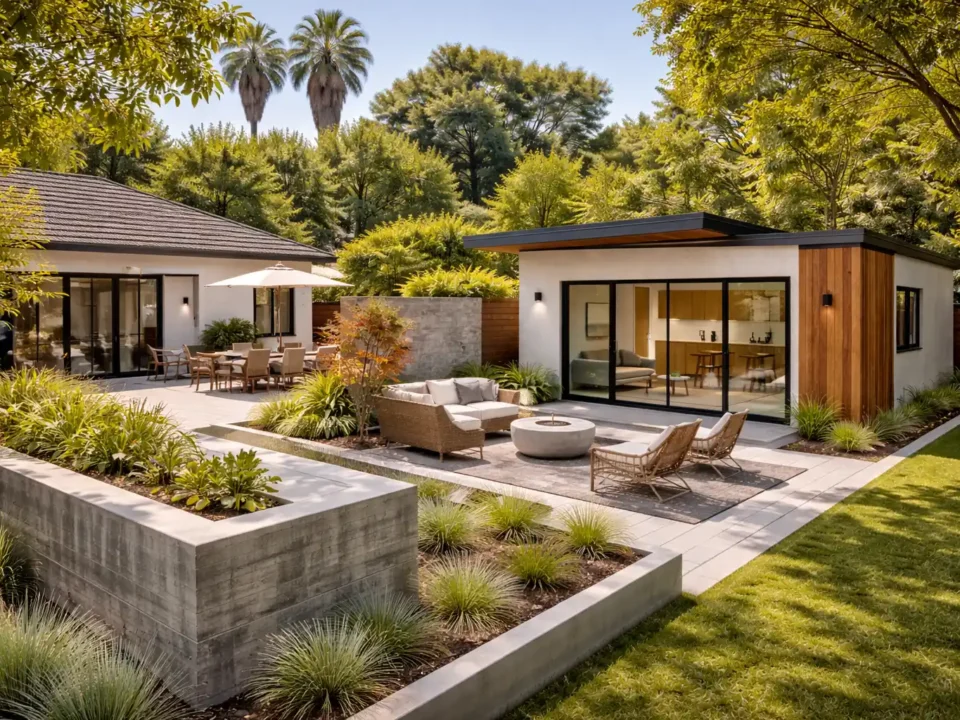
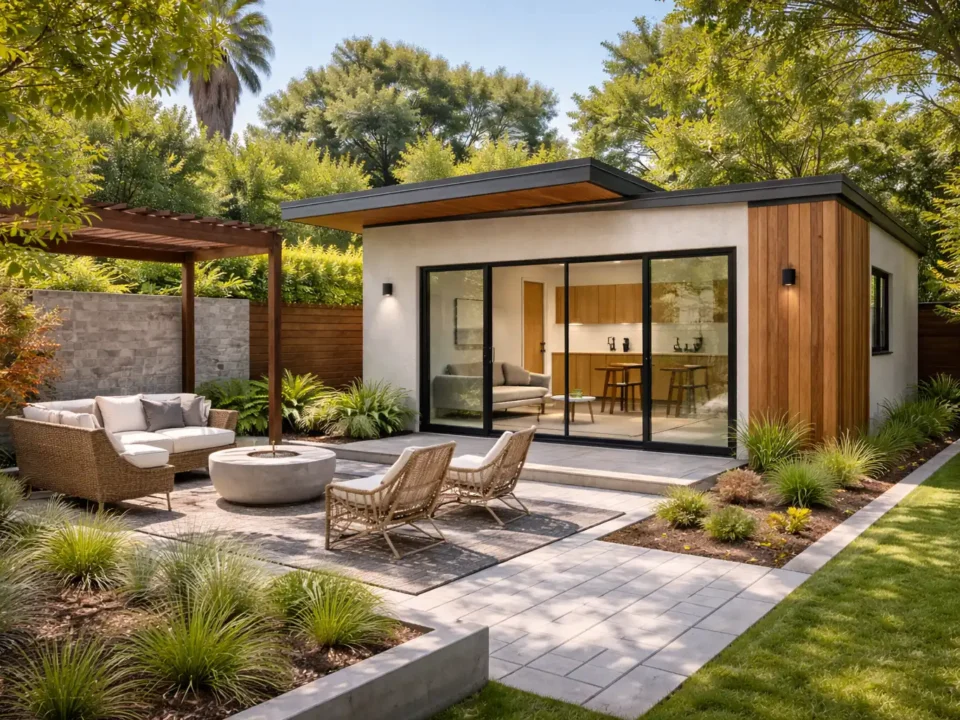
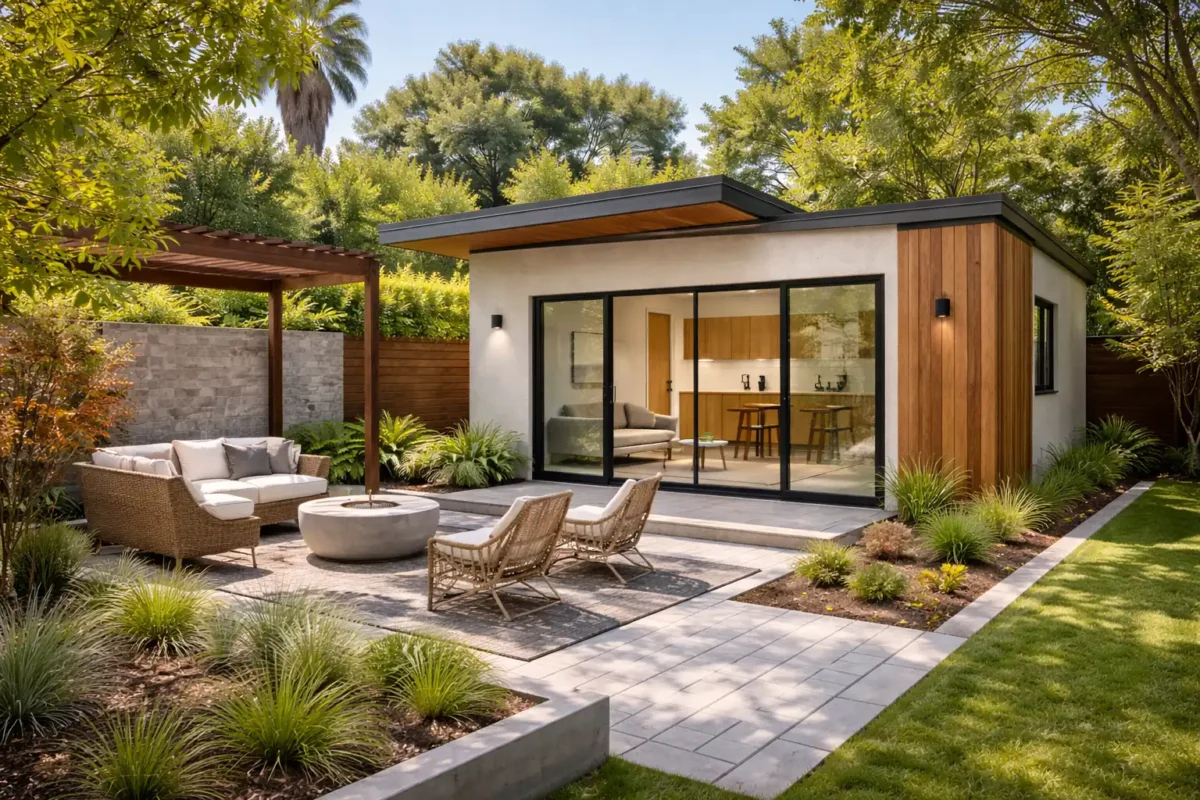
- Exterior integration: A small patio, privacy landscape, and pathway often raise rental appeal—and perceived value—significantly.
If you’re comparing the economics of other remodeling projects, our ROI breakdown here is useful: Kitchen Remodeling Costs & ROI in Los Angeles. For design direction, see Top Home Renovation Trends 2025.
3) A Realistic Timeline: From Feasibility to Final Inspection
A strong timeline depends on two things: accurate early planning and clean documentation. Garage conversions can move faster than ground-up ADUs, but permit flow and lead times still matter. Below is a realistic milestone map for many LA projects.
Phase 1: Feasibility & Concept (typically 2–6 weeks)
- Site walk-through, measurements, and structural observations
- Utility review: electrical capacity, plumbing routing, HVAC approach
- Initial layout concepts and a finish standards plan
- Budget alignment and scope definition (the step that reduces change orders later)
Phase 2: Plans & Permitting (jurisdiction-dependent)
- Plan drafting coordinated with ADU rules and building code requirements
- Submittal, review comments, revisions, and resubmittal if needed
- Permit issuance and inspection scheduling strategy
If you want a deeper explanation of the permit process in LA, read: The Legal Process of Home Remodeling in Los Angeles.
Phase 3: Construction (often 12–20+ weeks)
- Demo & prep: Removing non-compliant elements and preparing for new assemblies
- Envelope upgrades: insulation, air sealing, moisture control, windows/doors
- MEP rough-in: electrical/plumbing/HVAC routing and inspections
- Drywall & interior build: sound control, finishes, cabinetry, tile
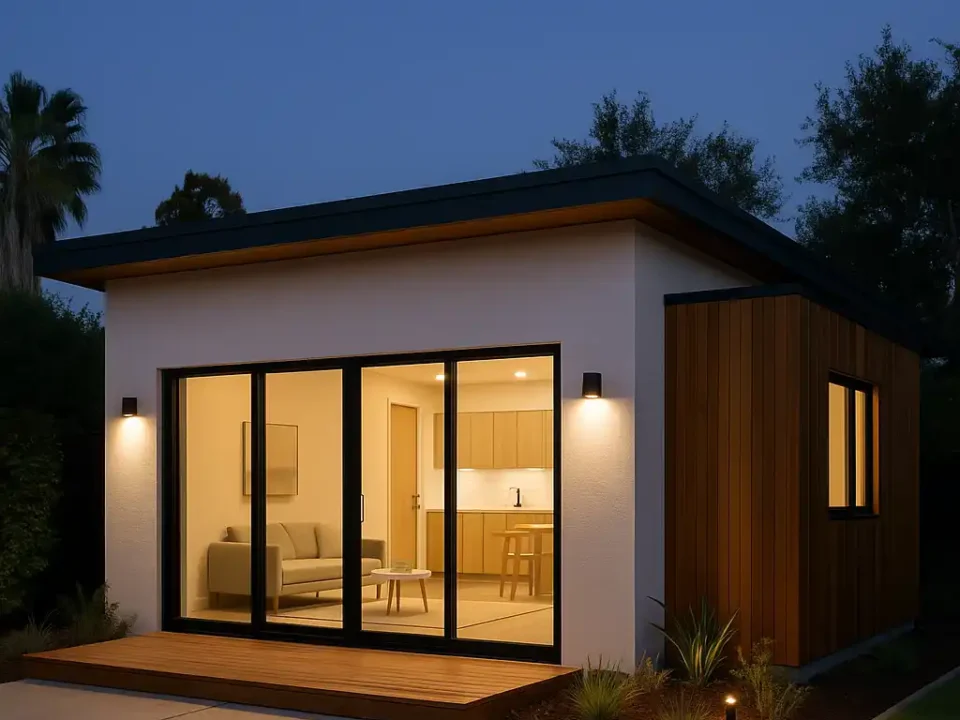
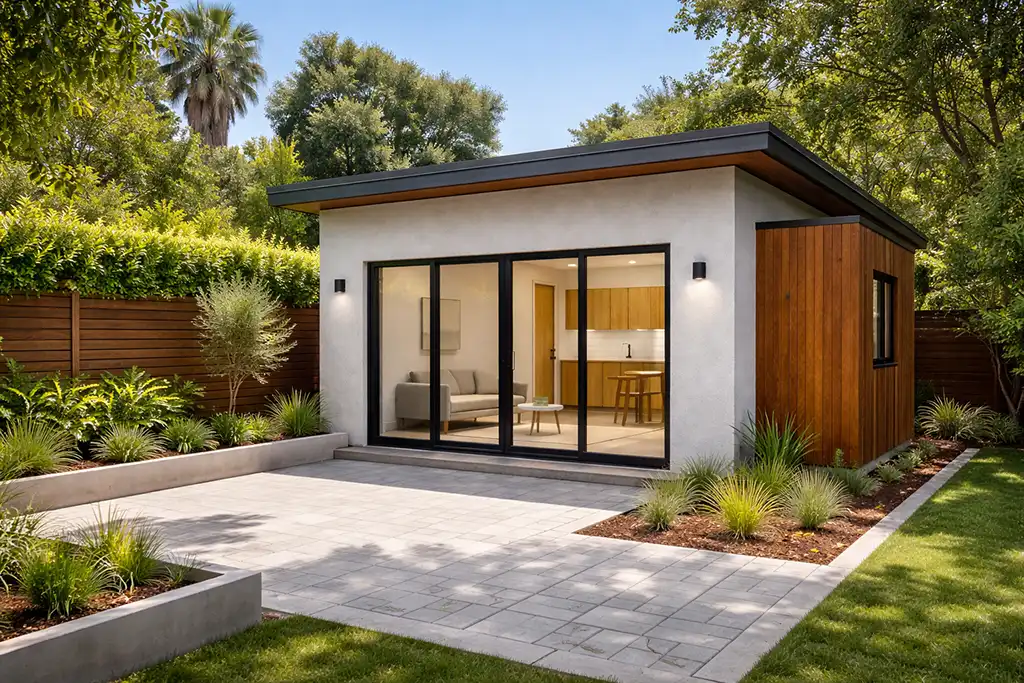
- Exterior integration: access path, patio, lighting, landscape privacy
- Final inspections & turnover: punch list, documentation, close-out
ZPR’s goal is to keep the project predictable—fewer surprises, fewer delays, and a final result that feels intentional. You can see recent work on our Latest Project page and more examples in our Portfolio.
4) Permits & Zoning Essentials for Garage Conversions
Los Angeles has made ADU creation more accessible, but garage conversions still require thoughtful compliance. Your documentation needs to show that the new unit is safe, ventilated, energy-conscious, and properly separated from the main residence where applicable.
Key permit considerations that frequently impact garage ADUs
- Egress & safety: Code-compliant exit paths and emergency egress windows/doors.
- Fire separation: If the garage shares walls/ceilings with the main house, fire-rated assemblies and details may be required.
- Ceiling height and habitable space standards: Planning must account for finished floor build-ups and mechanical routing.
- Parking rules: Requirements vary by location and circumstances; planning early prevents redesign.
- Utilities: Electrical load and service capacity, sewer connections, and water heating approach must be defined.
- Energy requirements: Insulation, glazing, and ventilation strategies should align to California expectations.
For energy-smart construction choices that can improve comfort and reduce operating costs, see: Energy-Efficient Renovation in California.
Contractor selection matters here. A garage ADU is not a “quick remodel”; it’s a regulated build with multiple inspection checkpoints. If you’re evaluating teams, read: How to Choose the Right Contractor for Your Renovation Project.
5) ROI: Rental Income, Payback, and Property Value
A garage ADU’s ROI typically comes from three sources: (1) monthly cash flow, (2) increased property utility (family flexibility), and (3) market perception at resale. The right design choices—privacy, acoustics, daylighting, and durable finishes—often affect ROI more than minor décor upgrades.
How owners use garage ADUs in LA
- Long-term rental: A stable income stream that can offset mortgage and operating costs.
- Guest/family suite: Multi-generational living without compromising privacy in the primary home.
- Work-from-home studio: Separate space that supports productivity and resale appeal.
- Future planning: Flexibility for caregiving, adult children, or aging-in-place strategies.
What improves “rentability” and perceived value
- Separate entry and pathway
- Quiet interiors (sound isolation)
- Natural light and ventilation
- Functional kitchenette and storage
- Durable finishes that age well
- A small outdoor seating zone (even a compact patio)
If you want to compare the performance of different renovation strategies, our broader remodeling topics can help you frame ROI decisions: Renovation vs. Remodeling vs. Restoration.
6) Why ZPR Garage Conversions Perform Better
Premium outcomes are built into the process—especially in a conversion. ZPR focuses on the details that protect your investment and elevate daily living:
- Feasibility discipline: We identify structural, moisture, and utility issues early.
- Envelope-first approach: Moisture control, insulation, air sealing, and ventilation are treated as essentials—not add-ons.
- MEP right-sizing: HVAC, electrical, and plumbing are designed for reliability, comfort, and safety.
- Finish standards matrix: You choose finishes with clear expectations, reducing scope drift and delays.
- Documentation mindset: Clean permit close-out supports refinancing, resale, and appraisals.
Learn more about our team on About Us, explore Services, and view completed transformations in our Portfolio.
Ready to Convert Your Garage into a High-Value ADU?
Start with a feasibility call. We’ll review your garage conditions, discuss realistic budget ranges, and map the fastest path to a quiet, code-compliant guest house that feels like new construction.
Contact ZPR Renovation: info@zprrenovation.com · +1 (818) 251-6570 · Contact Form
FAQ: Garage ADU Conversions in Los Angeles
Is converting a garage usually cheaper than building a new ADU?
Often yes, because the footprint and shell exist. However, slab corrections, utility upgrades, and code assemblies can significantly change the final total. The right comparison is “conversion scope vs. performance expectations”—not just square footage.
What usually delays a garage conversion timeline?
The most common delays are permit revision cycles, lead times on windows/doors/cabinets, electrical service constraints, and hidden moisture or structural conditions. A strong feasibility phase reduces these risks.
Do I need separate utilities for a garage ADU?
Not always. It depends on the project goals, capacity, and local requirements. Many conversions work well with shared utilities, but certain use cases may benefit from added metering or dedicated service strategies.
How do I maximize renter appeal?
Prioritize privacy (separate entry/path), quiet interiors, daylight, a functional kitchenette, durable finishes, and a small outdoor seating zone. Design choices that improve comfort often pay back faster than purely decorative upgrades.
Where can I see examples of ZPR work?
Browse our Portfolio and Latest Project pages.